Joy in work
„And though all things are now marred with evil, yet in our completed work we feel a joy akin to His, when, looking on the fair earth, He pronounced it ‘very good.’”
Education, Kapitel 24
Education, Kapitel 24

Can everyone be an entrepreneur? And can you eat the Bible?
Two unusual questions that guide us through this workshop – and to both, we say “Yes.”
In the first part, we ask: What does it mean to think entrepreneurially – in our minds, hearts, and daily lives?
Together, we discover why every person can be an entrepreneur – because an entrepreneur is simply someone who takes initiative. It’s about responsibility, courage, and the trust to take new paths – not just in business, but in all of life.
Being entrepreneurial is not a role – it’s a mindset.
The second part tells a story – a story that was written because we did something:
Can you eat the Bible?
Through the lens of our work in Africa, we share how a thought turned into action – and how spiritual principles became practical, tangible, and even edible: in the middle of agriculture, in everyday life, in the dust of real life. And all of it happened without a grand plan.
This workshop is not a lecture series – it’s a shared journey.
With real stories, biblical inspiration, and plenty of space for honest exchange.
For people who want to discover why work, faith, and joy belong together.
Agenda
What are your expectations for the workshop?
We begin with what moves you.
The Miracle Question
“Imagine a miracle happens overnight – and all the issues you’ve been carrying are resolved. What would be the first thing you notice? What would you do first?”
Why we do what we do
Discover your inner fire.
What does it truly mean to be an entrepreneur?
Explore what defines an entrepreneur – in both a biblical and a practical sense.
Being an entrepreneur – and making the Bible edible
Stories and inspirations that encourage, challenge, and give courage.
Workshop Goals
Understand how thought patterns shape our actions:
When we understand why and how we act – with which values and attitudes – the what becomes an expression of inner conviction, not just a job. It’s a journey from occupation to vocation.
Discover what it means to be an entrepreneur –
and learn how to deal constructively with failure.
Explore why we are called to internalize the Bible –
with heart, soul, and mind – and how it can become tangibly “edible.”
Grasp that our actions must always be directed toward restoring the relationship between people and God –
and learn to align personal and professional life with this spiritual perspective.
Recognize how to inspire others through presence, language, and action –
and develop your first personal steps to live this out in your context.
Learn ways to deal with fear constructively, discover your sources of joy,
and strengthen your motivation to act in everyday life.
What to Expect
No scripted answers – but a living process.
No lectures – but shared discovery.
No “one-size-fits-all” – but a workshop shaped by the participants themselves.
This workshop was born out of a desire: to act together instead of just discussing – and to experience genuine joy in the process.
The idea came while reading Ellen White, who essentially said:
“When we undertake something together, we lose the opportunity to argue – and gain joy instead.”
From this attitude, a path has emerged that has grown over the years. The workshop is an extract of this journey – full of experiences, principles, and personal encounters.
Also joining us is Elizabeth, who began her journey from employee to entrepreneur three years ago. She knows the highs and lows of this path firsthand – and will share her insights.
From the story of creation, it is often said that two things survived the Garden of Eden: marriage and the Sabbath.
But there are three things – work also endured beyond the Garden.
Yet it is rarely mentioned, even though it is central.
Even though work became more burdensome after the fall (“By the sweat of your brow…”), it remained essential.
But just like marriage and the Sabbath, the image of work has also become distorted.
This workshop aims to help rediscover, heal, and fill this image with joy.
We look forward to having you with us.
Let yourself be inspired – and become the entrepreneur of your own faith and calling.
Would you like to know who you’re dealing with?
Perhaps you’ve wondered why we are depicted as astronauts in the image. It’s not because we want to join NASA – but because it’s about something else: embarking on a journey.
Faith challenges us to enter new spaces. Being an entrepreneur – spiritually and practically – means thinking beyond what is visible.
Just as astronauts venture into the unknown, entrepreneurship also requires courage, vision, and trust.
One image helps us with this: The Bible as “Basic Instruction Before Leaving Earth” – a guide for the great journey of life.
Elizabeth Kunhimon brings international HR experience – from recruiting to talent development to leadership. Her journey did not begin with a career plan, but with real encounters: people hungry for opportunity and purpose. Her strength? Recognizing potential – not just on paper, but in the heart. Her motivation: HR should not merely manage processes, but empower people.
Andreas Hosang is an entrepreneur with a spiritual compass. His childhood dream wasn’t to become an astronaut – but a pastor. Today, he lives his calling through value-driven action in the business world. The astronauts in the image symbolically represent his vision: reaching for the stars. The Bible? For him, it’s a “Basic Instruction Before Leaving Earth” – a guide for purposeful, meaningful entrepreneurship.
Together, they create a workshop that not only informs but inspires. Full of heart, faith, and drive.

Video 1 – Introduction & Background
In this video you get an overview of Farming God’s Way – with biblical foundations, historical context, and the intention behind the method. It’s about how sustainable agriculture can be connected with faith and wisdom.
FGW01 101 Overview
Video 2 – Biblical Key Elements
This video explains the biblical principles that are central to Farming God’s Way. It shows how spiritual truths are directly connected to agricultural practices – as part of a blessed lifestyle.
FGW01 200 Introduction to Biblical Keys
Video 3 – The Six Main Technologies
This video covers the six key technologies used in Farming God’s Way – including soil cover, precise seeding, and other practical methods that improve yield and sustainability.
FGW01 300 Six Technology Keys
Video 4 – The “Why” behind the “How” of the Method
This video addresses the why behind the how: Why is precision important, why are certain things done in a certain way – and how biblical values are reflected in practical action.
FGW01 302 20 Reasons Why We Do the How
Video 5 – Management and Responsibility
Farming God’s Way places great value on management, precision, and high standards. This video shows how care and responsibility are essential for fruitful work – both in farming and in faith.
FGW01 400 Management
Video 6 – Testimonials
You’ll gain insights into testimonies and success stories from people applying Farming God’s Way. Their experiences clearly show how well the method works in various contexts.
FGW01 502 Testimonies
Additional Note
We’ve also provided the link to the YouTube channel. There you’ll find over 20 videos on Farming God’s Way. The videos are in English.
Farming God’s Way Main Series
Christianity in Bankruptcy
Central Thesis: Today’s Christianity is far from its original purpose and structure – it resembles a cumbersome, profit-driven corporation more than a vibrant, inspiring movement of Jesus.
Comparison with Business: Churches and businesses have structural parallels: organization, vision, resources, customer focus. Good companies address real needs – the church should do the same.
God’s Original Model: God created man in His image, to serve others in a selfless “economic model.” The “Fall” (Adam and Eve) marked a break from the selfless principle → humanity placed itself at the center.
Plan B – Christianity: Jesus founded the “enterprise of God’s disciples,” which later became Christianity. The goal: restoring the original image of God in humans and the selfless relational structure. Jesus modeled “servant leadership,” formed a small, effective team (12 disciples), and conveyed values, not rules.
Critique of the Current State: Christianity has often become structurally rigid, hierarchical, and devoid of substance. There are over 10,000 denominations – a sign of division rather than unity. Churches are losing relevance because they no longer offer what people truly need: meaning, encounter, transformation.
Call for Reformation: A new reformation is needed – not a revolution, but a gentle, ongoing renewal. Four starting points: Understand Jesus – personal relationship instead of theory Understand myself – identity & honesty Understand others – perceive real needs Connect – lead people to Jesus through people
Final Appeal: “You are called to be an entrepreneur of heaven.” Express your faith actively, diversely, and with a focus on people – not in outdated structures, but through lived love and real impact.
Link to the article: Christianity in Bankruptcy
Calling – A New Perspective on Our Work

This book reflects on work not as a mere job, but as an expression of human dignity, because it mirrors God’s creation.
It combines biblical perspectives with practical insights and social observations. Questions addressed include:
Why do I work at all?
Why is work sometimes hard for me?
How can I align my professional life with my values?
How can I view my profession as an act of worship?
Target group: All Christians in their professional roles – whether homemaker, craftsman, teacher, or leader. It is especially aimed at people who want to live their vocation meaningfully and in faith.
Link to a related lecture: Work – Timothy Keller Sermons / Timothy Keller – Faith and Work
 Societal Tension: Fear vs. Security: We live in a time shaped by fear of the future and an obsession with security. Hartl emphasizes that this tension strongly influences our thinking and actions. Hope as a Leadership Principle: Instead of relying on control, leadership should arise from hope and trust. This attitude creates space for creativity and freedom to act. Work as a Question of Dignity: Hartl highlights that work is more than performance – it is an expression of our dignity. The purpose of work lies in doing justice to the one who created us and in taking responsibility. Courage to Take Responsibility: Responsible action is not a luxury, but an expression of human freedom and meaning. Hartl calls for courage in work and urges people not to be paralyzed by fear. Spiritual Resources in Challenging Times: In the context of uncertainty, Hartl recommends an attitude that combines spirituality, hope, and resilience – as a foundation for good leadership and fulfilling work.Link to a related talk: A New Perspective on Work
Start with Why
The Golden Circle: Why → How → What: The core of the book is the “Golden Circle”: Always start with the WHY (purpose), then the HOW (strategy/method), and finally the WHAT (product/service). This way, you reach people emotionally and build lasting loyalty.
Inspiration Instead of Manipulation: Manipulation works short-term – inspiration works long-term. Truly effective leadership is born from vision and conviction. Examples of inspiring “why” thinkers: Apple, Steve Jobs, Martin Luther King.
Leading Through Conviction: Successful leadership is based on clear communication of the WHY – in behavior, decisions, and brand leadership. Employees who share the “why” act out of conviction – not obligation.
Building Trust and Preserving Purpose: Trust doesn’t arise through arguments but through experienced credibility. It becomes dangerous when organizations lose sight of their “why” – for example, due to rapid success or growth.
Purpose for Individuals and Organizations: The WHY applies to companies as well as individuals. It helps to live authentically, purposefully, and meaningfully – not only in your profession, but in all your actions.
Link to a related talk: How Great Leaders Inspire Action / Start with Why
Work as Calling – A Theological Perspective on Work
 Work as Part of Creation:
Work is not a necessary evil or merely a means to an end. Timothy Keller emphasizes that work is part of God’s original design. Even in paradise, humans were called to create, cultivate, and care. Work is an expression of the image of God – creative, serving, and full of meaning.
Calling vs. Career:
Keller distinguishes between work as a career (self-fulfillment, status, income) and work as a calling. Those who see their work as a calling from God regard it as a service to others and a contribution to the common good – regardless of the job’s prestige.
Fallen Work – Between Frustration and the Search for Meaning:
Since the Fall, work has become burdensome: marked by competition, vanity, exploitation, and emptiness. And yet, it remains a space where we can encounter God and reflect Him – through integrity, dedication, and hope in the midst of everyday life.
Work and Idolatry:
Keller warns against idolizing work. When identity, security, and worth are rooted in performance, we become enslaved. But those rooted in Christ can work in freedom – not to prove themselves, but to serve.
Service Instead of Self-Realization:
A Christian work ethic means: I am here to use my gifts for the benefit of others. Whether I lead a company, teach, or collect waste – every honest job has dignity when it is done with love and responsibility.
The Gospel as Foundation:
Only the gospel frees us from the fear of “not being enough.” Those who know they are accepted by God do not need to justify themselves through their work. This inner freedom transforms motivation and gives strength for long, faithful service.
Link to a related talk: Work – Timothy Keller
In this interview, Andreas Hosang and Ochieng Russell discuss methods in sustainable agriculture: Farming God’s Way, Conservation Farming, and Non-Plowing Farming. These approaches not only regenerate soils and increase yields but also actively absorb more CO₂ from the atmosphere than they emit.
Key topics:
This video is ideal for anyone who wants to understand how sustainable agriculture can address global challenges like climate change and soil erosion while simultaneously improving agricultural productivity.
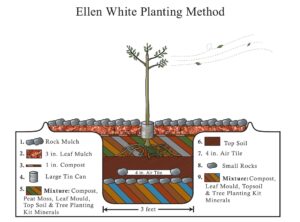
Together with my father, I started to transfer the principles of the so-called Ellen White-Method to a smaller format. Originally designed to build up a whole cubic meter of soil – one meter deep, one meter wide – we wanted to find out how this concept could also be implemented on a smaller scale.
The method is based on the idea of carefully layering soil, rocks, compost, and mulch to create a living soil environment that not only nourishes plants – especially trees – but also significantly accelerates their growth. Yet with all the knowledge and technique, one thing remains central: the trust that true flourishing lies in God’s hands.
Because we are convinced: The best soil preparation is of little use if faith is missing. Technology without faith brings different – often limited – results. This small project is therefore more than a gardening experiment. It is an expression of our trust – and a silent prayer in the earth.
A practical experiment – just get started and entrust the growth to God
Below are some pictures of our little project – an attempt to apply the Ellen White Method in a small format. The method itself involves digging a roughly 1 m × 1 m hole, filled in layers with soil, stones, and covered with mulch and stones to create ideal growing conditions for trees. It’s not only about the right combination of materials, but also about the spiritual mindset: technique alone bears no fruit if trust in God is lacking. Growth is ultimately His work.
Our implementation required a fair amount of effort: not all layers and components were easy to find. Instead, we asked around, researched, experimented – and gathered the necessary materials from regular construction and garden stores.
We are not professionals in this area. But we simply got started and created our own little experiment with what we had learned, observed, and understood. At first, we thought of the smallest possible setup: a geranium box measuring 60 cm × 70 cm × 17 cm. But after speaking with our colleague from Africa, with whom we collaborate closely on a project, it became clear: the height should be at least 30 cm so the roots can develop well.
So we decided on a mobile raised bed made of durable Douglas fir wood with a board thickness of 2 cm. The corner feet are made of 2 mm thick powder-coated sheet steel. The galvanized corner braces are 2.5 mm thick. The mobile bed stands on 4 rubber wheels. When purchased, it comes with ground fleece, 20 mm baseboards, sidewall liner, mounting accessories, and instructions. The total fill volume is about 300 liters. If the floor is placed in the middle, the volume is reduced to around 150 liters. Dimensions: 90 × 55 × 73 cm. Weight: 32.5 kg.

We then filled this container accordingly – see picture.

In the end, we planted a cherry tree, an apple tree, basil, a chili plant, and another herb that my grandfather gave us – all together in one bed. Time will tell how it all develops. What we almost forgot: We haven’t yet prayed over the box and dedicated it to God – I just remembered that while writing this for you. We will definitely do that – because we believe that true flourishing doesn’t come from what we do alone, but from God’s blessing.
Below you see the diagram of the Ellen White planting method, which we adapted into a small-scale version for our raised bed. Below the image, you’ll find the numbered layers and components used in the method – along with the materials we actually used when the original components were not readily available on the market. Our goal was to create a practical, replicable example – even without perfect materials. The list is meant to help you start your own journey: to learn, observe, and simply begin.
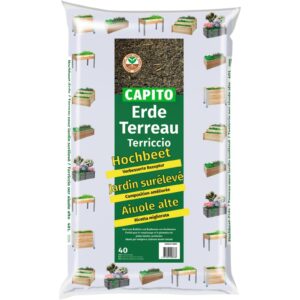



Finally, we’ve created a small volume calculator for you. Depending on the size of your container, you can calculate the required volume and receive an automatic shopping list with the recommended layering materials. By the way, our box has a volume of 288 liters.
We’ve created a shopping list and a volume calculator for this purpose.
Farming God’s Way is more than sustainable farming – it’s a holistic method that
considers the entire natural cycle. Soil, plants, trees, animals, insects, and humans exist
in a harmonious relationship where each serves the other. The goal is to create a
healthy, closed-loop system that protects the environment and strengthens
relationships within the community.
This series explores both the theoretical foundations and the practical implementation
of this approach. Discover how farming can align with biblical principles and positively
impact nature, communities, and future generations.
Note: All videos are in Swahili.
1. Farming God’s Way – Sehemu ya Part 1 of 15
2. Farming God’s Way – Sehemu ya Part 2 von 15
3. Farming God’s Way – Sehemu ya Part 3 von 15
4. Farming God’s Way – Sehemu ya Part 4 von 15
5. Farming God’s Way – Sehemu ya Part 5 von 15
6. Farming God’s Way – Sehemu ya Part 6 von 15
7. Farming God’s Way – Sehemu ya Part 7 von 15
8. Farming God’s Way – Sehemu ya Part 8 von 15
9. Farming God’s Way – Sehemu ya Part 9 von 15
10. Farming God’s Way – Sehemu ya Part 10 von 15
11. Farming God’s Way – Sehemu ya Part 11 von 15
12. Farming God’s Way – Sehemu ya Part 12 von 15
13. Farming God’s Way – Sehemu ya Part 13 von 15
14. Farming God’s Way – Sehemu ya Part 14 von 15
15. Farming God’s Way – Sehemu ya Part 15 von 15
Calling instead of just a career – Faith and work belong together
Work is more than earning a living. It is a spiritual expression of calling and a central part of human dignity. Through our work, God’s purposes can become visible.
Matthew 5:16 – Let your light shine before others, so that they may see your good works and give glory to your Father who is in heaven.
Everyone can be an entrepreneur – in mind, heart, and everyday life
Entrepreneurship is redefined: not as an economic concept, but as an inner attitude that takes responsibility and takes initiative.
An entrepreneur is someone who acts – with courage, faith, and vision.
Matthew 28:19–20 – Go therefore and make disciples of all nations, baptizing them in the name of the Father and of the Son and of the Holy Spirit, and teaching them to observe all that I have commanded you. And behold, I am with you always, to the end of the age.
Make faith practical – all the way to “eating the Bible”
The connection between spiritual principles and tangible action becomes radically visible – for example, in agriculture (“Farming God’s Way”), where the Bible becomes a source of nourishment – both literally and symbolically.
Faith is not debated – it is lived.
Psalm 104:14 – You cause the grass to grow for the livestock and plants for man to cultivate, that he may bring forth food from the earth.
One More Thing: You are called to be an entrepreneur of heaven
Faith is not a theory.
Calling is not just an idea.
And entrepreneurship is not a title –
it’s your invitation to live the Gospel with your hands and feet.
Don’t just consume faith – become a creator of impact.
Bring your faith into the world – through work, relationships, and courageous responsibility.
This collection of spiritual quotes accompanies the workshop “Called to Act – Until He Comes.” The words of Ellen G. White serve as inspiration, encouragement, and a tool for reflection for people who want to act with God in their everyday lives – whether in their profession, in ministry, or in their personal environment.
The quotes are organized thematically and available in both German and English. All quotes are taken from official publications and include source references.
Understand how thought patterns shape our actions
“The mind controls the whole man. All our actions, good or bad, have their source in the mind. It is the mind that worships God, and allies us to heavenly beings.”
Fundamentals of Christian Education, p. 425
Originaltext
“If the thoughts are wrong, the feelings will be wrong; and the thoughts and feelings combined make up the moral character.”
Testimonies for the Church, vol. 5, p. 310
Originaltext
Discover what it means to be an entrepreneur
“Men of stamina are wanted, men who will not wait to have their way smoothed and every obstacle removed, men who will inspire with fresh zeal the flagging efforts of dispirited workers, men whose hearts are warm with Christian love and whose hands are strong to do their Master’s work.”
The Ministry of Healing, p. 497
Originaltext
“Many who are qualified to do excellent work accomplish little because they attempt little. Thousands pass through life as if they had no great object for which to live, no high standard to reach.”
The Ministry of Healing, p. 498
Originaltext
Explore why we are called to internalize the Bible
“The Word of God is the bread of life. Those who eat and digest this Word, making it a part of every action and of every attribute of character, grow strong in the strength of God. It gives immortal vigor to the soul, perfecting the experience and bringing joys that will abide forever.”
Signs of the Times, June 25, 1902
Originaltext
“All who study the word are represented as eating the word, feeding on Christ. … Even as the bodily necessities must be supplied daily, so the word of God must be daily studied—eaten, and digested, and practiced. … Study the word, and practice the word, for it is your life.”
Letter 4, 1902, Counsels on Sabbath School Work, p. 43
Originaltext
Grasp that our actions must always be directed toward restoring the relationship between people and God– Acting with an Eternal Perspective
“God ordained that the beings He created should work. Upon this their happiness depends. No one in the Lord’s great domain of creation was made to be a drone. Our happiness increases and our powers develop as we engage in useful employment.”
Life Sketches, p. 130
Originaltext
“Every act of self-sacrifice for the good of others strengthens the spirit of beneficence in the giver’s heart, allying him more closely to the Redeemer of the world.”
Steps to Christ, p. 79
Originaltext
Recognize how to inspire others through presence, language, and action
“The strongest argument in favor of the gospel is a loving and lovable Christian.”
The Ministry of Healing, p. 470
Originaltext
“Wherever we go, we should carry an atmosphere of Christian hopefulness and cheer; then those who are out of Christ will see some attractiveness in the religion we profess.”
Gospel Workers (1892), p. 122
Originaltext
Learn ways to deal with fear constructively
“We have nothing to fear for the future, except as we shall forget the way the Lord has led us, and His teaching in our past history.”
Life Sketches of Ellen G. White, p. 196
Originaltext
“Worry is blind and cannot discern the future; but Jesus sees the end from the beginning. In every difficulty He has His way prepared to bring relief. … Our heavenly Father has a thousand ways to provide for us, of which we know nothing.”
The Ministry of Healing, p. 481
Originaltext
“The Christian’s life should be one of faith, of victory, and joy in God. … Truly spake God’s servant Nehemiah, ‘The joy of the Lord is your strength.’ And Paul says: ‘Rejoice in the Lord alway: and again I say, Rejoice.’”
My Life Today, p. 251
Originaltext
“Christians who gather up gloom and sadness to their souls, murmuring and complaining, are giving to others a false representation of God and the Christian life. They make the impression that God is not pleased to have His children happy, and in so doing they bear false witness against our heavenly Father.”
Steps to Christ, p. 116
Originaltext
“None of us should be ashamed of work, however small and servile it may appear. Labor is ennobling. All who toil with head or hands…are doing their duty and honoring their religion as much while working at the washtub or washing dishes as they are in attending church. While the hands are engaged in the most common labor, the mind may be uplifted and ennobled by pure and holy thoughts.”
Counsels for the Church, p. 209
Originaltext
Putting Faith into Practice – Spiritual Principles in Everyday Life
“Religion is not to be put on and off like a garment. It is to sanctify all the actions and relations of life. The true Christian will carry his faith into his business, recreation, and home duties, showing the spirit of Christ in everything.”
Signs of the Times, Sept. 3, 1885
Originaltext
„Its principles of diligence, honesty, thrift, temperance, and purity… are the secret of true success.“
Education, chapter 15 – Business Principles and Methods, paragraph Ed 135.1
Everyone Is Called – Entrepreneurs of God’s Kingdom in the Light of the Second Coming
“All who accept this great salvation pledge themselves to be co-workers with Christ. … All who have enlisted in the service of Christ are to work as He worked, and to love souls as He loved them.”
Testimonies for the Church, vol. 5, p. 604
Originaltext
“This obligation is resting upon all. All are required to labor to lessen the ills and to multiply the blessings of their fellow men. We must work for others’ good. Let all within the sphere of our influence become partakers of whatever of blessing we have received. None should be content to feed on the bread of life without sharing it with those around them.”
Testimonies for the Church, vol. 5, p. 606
Originaltext
 © 2024 made with support from Graubünden